PCR Lab
Place primers, step through thermal cycles and follow the DNA fragments you make.
Loading the experiment…
Quick reference
Choose the region
PCR uses two primers that bind to opposite strands of a DNA template. Their 3′ ends must point into the region to be amplified so extension produces templates for subsequent rounds.
Repeat the cycle
Heating separates the strands. Cooling permits primer annealing, and an extension stage allows a thermostable polymerase to make new DNA. Repeating these stages enriches the target product.
Check the experiment
Primer orientation and complementarity are necessary checks, but they do not establish experimental success. Reaction conditions, template quality and competing products matter. A no-template control helps reveal contamination.
Check your understanding Optional
Which arrangement supports amplification of a bounded region?
At the bench
Move from the teaching template to primer-binding and melting-temperature checks in Sequence.
Open primer checksSources and model notes
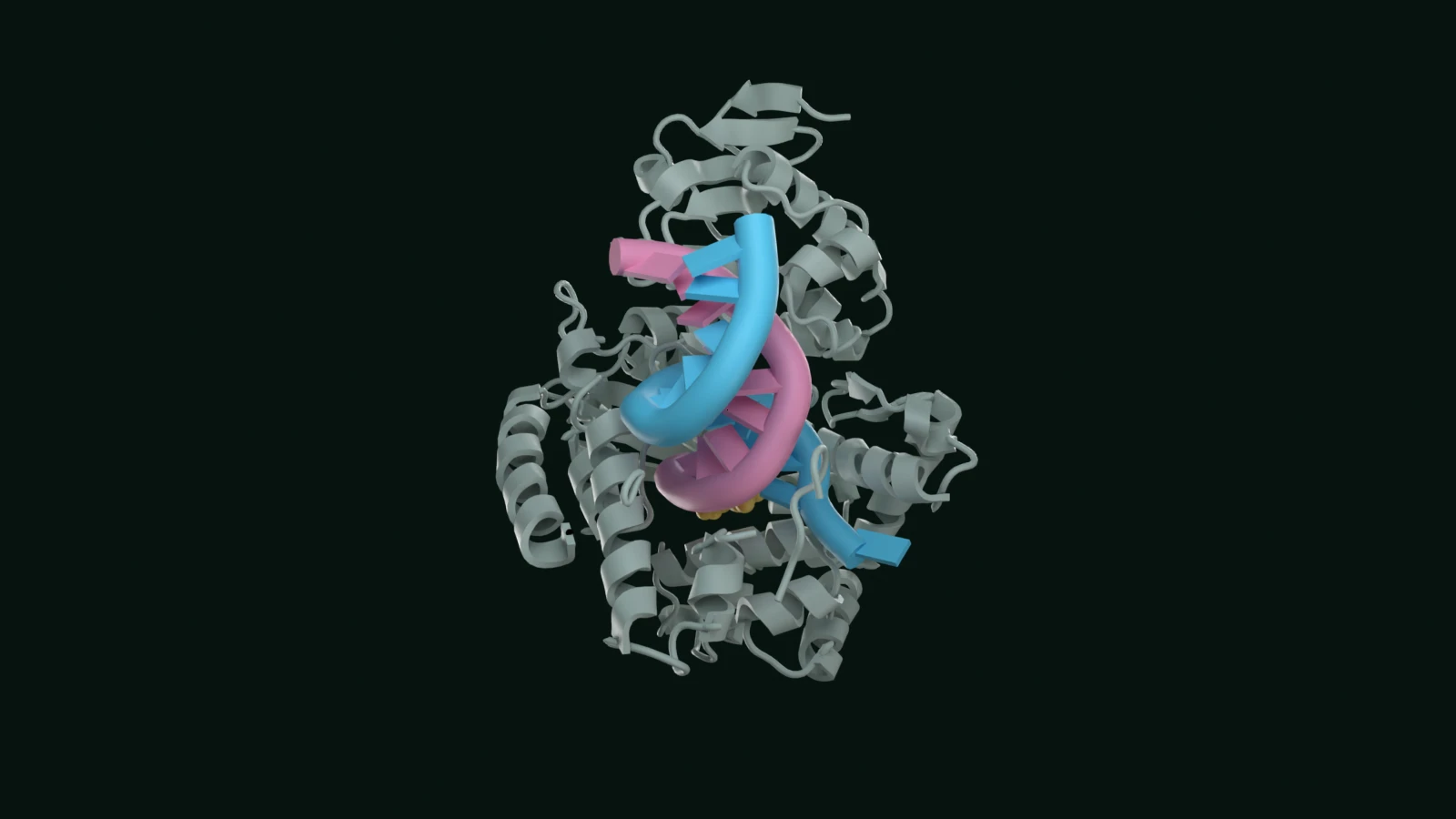
Structure-based views of resolved experimental coordinates. Cutaways, category colours, camera choices and guided highlights are authored for teaching. Coordinates remain fixed; highlights are not experimental trajectories or simulation outputs.
The purpose and cycling mechanism of PCR.