Mutation Lab
Change a DNA sequence. Follow the difference through codons to a growing protein.
Loading the experiment…
Quick reference
A message in triplets
During translation, a ribosome reads an mRNA in groups of three bases called codons. The reading frame determines where those groups start. Each sense codon specifies an amino acid; a stop codon signals termination.
Different edits, different consequences
A substitution may preserve the encoded amino acid, change it, or create a stop. An insertion or deletion within a coding region changes the downstream reading frame when its length is not a multiple of three.
Sequence is the beginning
A synonymous change leaves the amino-acid sequence unchanged, but can still affect other biological processes. A missense change does not establish whether a protein loses function. Experiments and additional evidence are needed.
Check your understanding Optional
A single base is deleted early in a coding sequence. Why can many later amino acids change?
At the bench
Use reading frames and translation to inspect your own sequence after practising on the teaching example.
Open SequenceSources and model notes
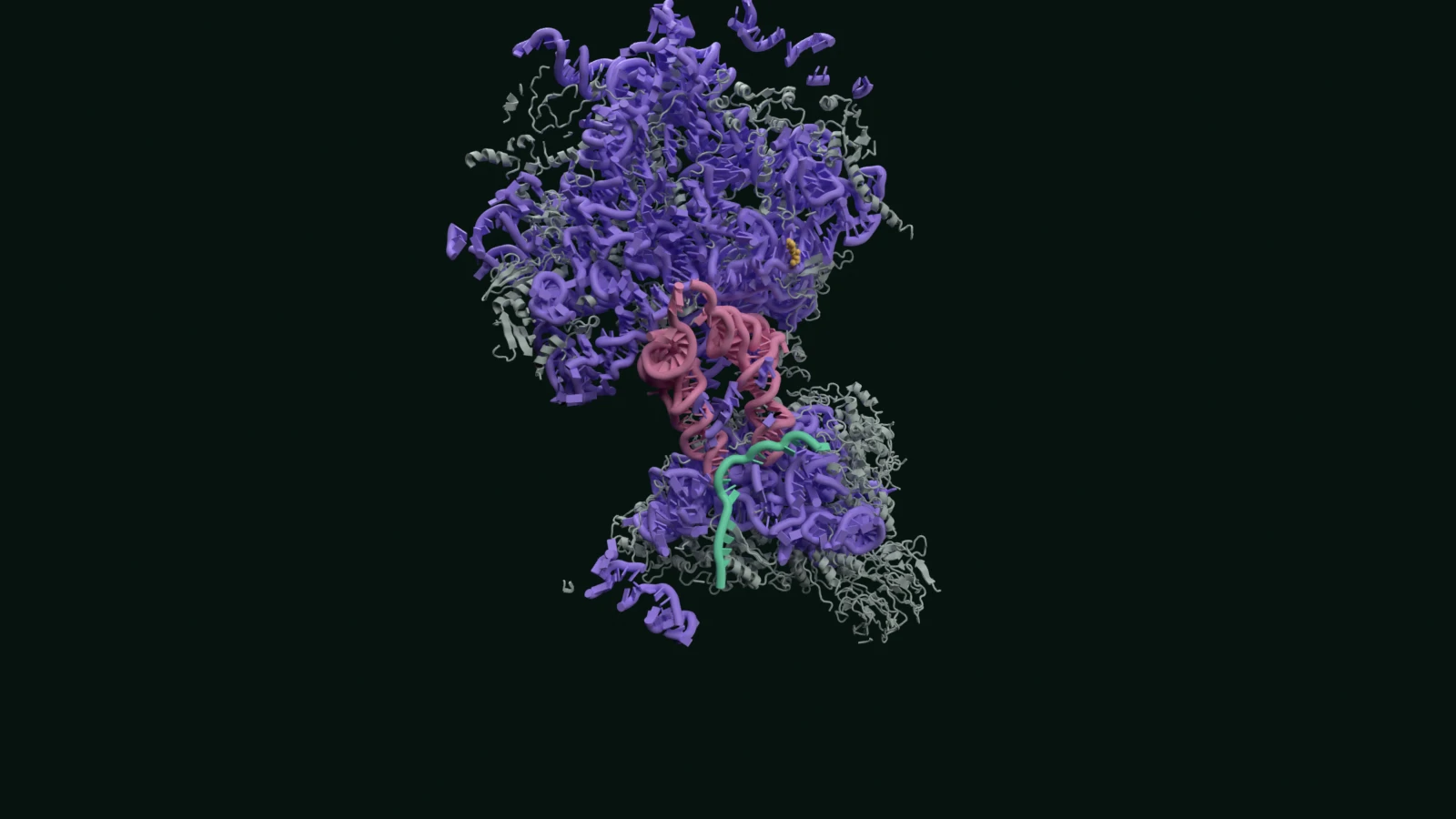
Structure-based views of resolved experimental coordinates. Cutaways, category colours, camera choices and guided highlights are authored for teaching. Coordinates remain fixed; highlights are not experimental trajectories or simulation outputs.
How insertions and deletions alter a coding frame.
Codon assignments; this model uses the standard genetic code.