CRISPR and Repair
Inspect a guide and target, then separate a DNA cut from the repair outcome.
Loading the experiment…
Quick reference
Recognise a target
SpCas9 uses a guide RNA and a compatible PAM in the DNA to recognise a target. The familiar NGG PAM is adjacent to the targeted sequence. Other CRISPR enzymes can have different requirements.
Cutting is one step
Cleaving DNA creates a substrate for cellular repair. Target recognition, cleavage and repair are distinct events. A guide match by itself does not establish editing efficiency or genome-wide specificity.
Read the result
End joining can restore the original sequence or produce insertions and deletions. Template-directed repair can copy information from a donor. Outcomes vary; the repair choices here are examples, not probabilities or experimental predictions.
Check your understanding Optional
A target was successfully cut. What can you conclude about the final edit?
At the bench
Compare the reading frames and translation of original and edited coding sequences.
Open SequenceSources and model notes
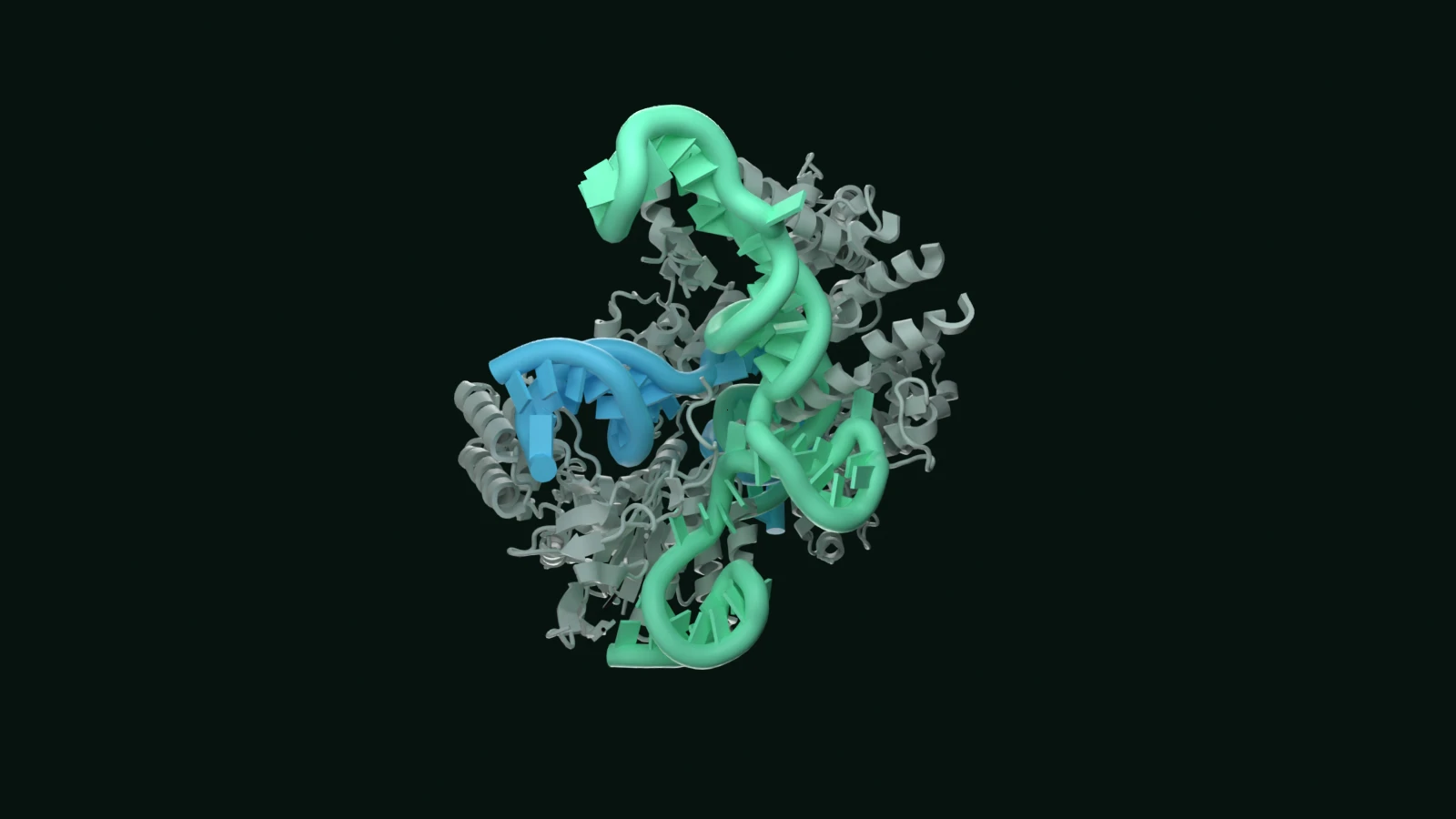
Structure-based views of resolved experimental coordinates. Cutaways, category colours, camera choices and guided highlights are authored for teaching. Coordinates remain fixed; highlights are not experimental trajectories or simulation outputs.
Guide RNA and PAM-containing DNA in a Cas9 structure.
Targeting, cleavage and DNA repair.